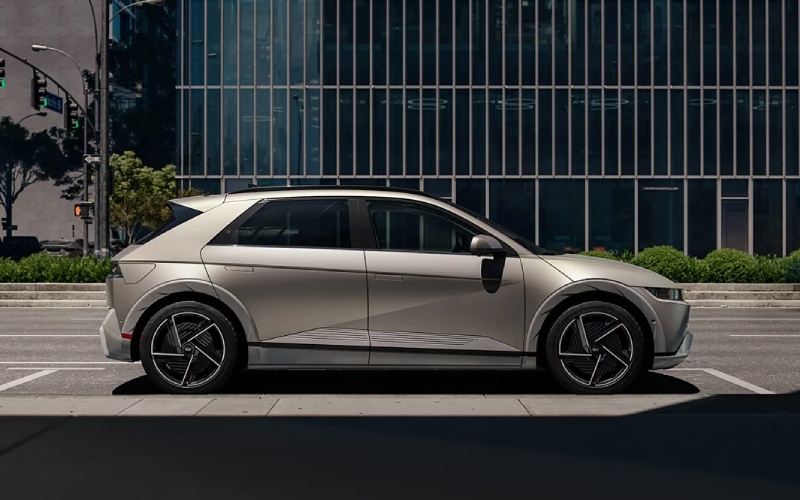
CardinaleWay Hyundai Glendora - Is the Hyundai IONIQ 5 or Kia EV6 better for EV charging around Azusa, CA?
For many EV shoppers, the biggest question is not just which electric SUV looks better or accelerates quicker. The more practical question is, "Which one will be easier to charge in real life?" When comparing the Hyundai IONIQ 5 and Kia EV6, both vehicles bring strong electric credentials, including available Vehicle-to-Load capability, advanced displays, and the smooth response drivers expect from a modern EV. However, the IONIQ 5 has a particularly compelling charging story because Hyundai has focused on making charging access, planning, and daily use feel simpler. That matters for drivers who split time between local errands, work commutes, freeway travel, and occasional road trips.
CardinaleWay Hyundai Glendora helps shoppers understand this difference clearly, especially for drivers serving San Dimas, Covina, and Azusa who want an EV that fits Southern California routines. The IONIQ 5 offers up to an EPA-estimated 318 miles of range, supports 800V/350kW DC ultra-fast charging, and can charge from 10-80% in as little as 20 minutes when using compatible equipment. It also comes with a Tesla Supercharger-compatible NACS port, giving access to more than 25,000 Tesla Superchargers without an adapter, plus an included CCS adapter for other networks such as Electrify America and ChargePoint. That combination gives the IONIQ 5 a major convenience advantage because it helps drivers choose from more public charging options.
Why charging access matters in this comparison
The Hyundai IONIQ 5 and Kia EV6 are both advanced EVs, but charging convenience often determines how enjoyable electric ownership feels after the first week. A strong EV should be easy to charge at home, straightforward to charge on the road, and smart enough to help plan longer routes. The IONIQ 5 checks each of those boxes with a well-developed charging ecosystem. Its standard NACS port is especially helpful because Tesla Superchargers are widely available along major California travel corridors. For drivers who use the 210, 57, 10, or 605, having broader fast-charging access can reduce uncertainty during longer days.
The IONIQ 5 also supports traditional Level 2 home charging, which is often the most convenient way to own an EV. With a 240V AC Level 2 charger, the IONIQ 5 can charge from 10 to 100% in about 7 hours and 20 minutes on select models. That means many owners can plug in overnight and start the next day with plenty of range. The Kia EV6 also offers capable EV charging hardware, but Hyundai gives shoppers more clearly integrated ownership support through Hyundai Home, EV Route Planner, Bluelink+, and the included CCS adapter. Those details may sound small individually, but together they make the IONIQ 5 feel easier to manage.
Key IONIQ 5 charging advantages
- NACS charging access: The IONIQ 5 includes a Tesla Supercharger-compatible NACS port, allowing access to more than 25,000 Tesla Superchargers with no adapter required.
- CCS network flexibility: An included CCS adapter helps drivers use additional DC fast-charging networks such as Electrify America and ChargePoint.
- Ultra-fast charging capability: With 800V/350kW DC charging, the IONIQ 5 can go from 10-80% in as little as 20 minutes when connected to compatible equipment.
- At-home charging support: Hyundai Home can help connect owners with Level 2 charger, solar panel, and energy storage options.
- Route confidence: EV Route Planner helps locate charging stations along specific routes and updates navigation guidance as needed.
These features are especially helpful for shoppers who are new to EV ownership. Many first-time EV drivers worry about where to charge, how long it will take, and whether public charging will fit a busy routine. The IONIQ 5 does a strong job answering those concerns. Instead of relying on a single network or a single charging method, it gives drivers multiple paths: home charging, Tesla Superchargers, CCS fast chargers, and navigation-based route planning. That flexibility is one of the biggest reasons the Hyundai stands out over the Kia EV6 for everyday usability.
What about range and daily driving?
Charging is only part of the EV equation. Range also matters, and the IONIQ 5 is strong here as well, with up to an EPA-estimated 318 miles on select RWD models. For many local drivers, that amount of range can cover multiple days of typical driving before needing a full recharge. A commute, grocery run, school pickup, dinner out, and weekend visit across the San Gabriel Valley can all fit comfortably within the IONIQ 5’s electric range when properly charged. Even when a longer drive is planned, the quick-charging capability helps reduce downtime.
The Kia EV6 offers competitive range depending on configuration, but the Hyundai’s charging ecosystem gives it a more complete ownership feel. Range is most useful when it is supported by easy recharging, and this is where the IONIQ 5 shines. The EV Route Planner can help drivers identify stops before range becomes a concern, while Bluelink+ lets owners remotely schedule or start and stop charging from a compatible smartphone. That remote access can be useful for managing home charging sessions, checking battery status, or preparing the cabin before leaving.
How Vehicle-to-Load adds everyday versatility
Another question shoppers often ask is whether an EV can power devices beyond simply moving the vehicle. The IONIQ 5 offers available Vehicle-to-Load (V2L) 120V charging outlets that can supply power inside and outside the vehicle for larger electric equipment and appliances. That can be useful for laptops, small appliances, outdoor gear, power tools, or work equipment. The Kia EV6 also offers V2L capability, so both vehicles perform well in this area, but the IONIQ 5 pairs that feature with a cabin layout that feels open and practical.
V2L is not just a novelty. It reflects how EV ownership is evolving. Drivers increasingly want vehicles that support daily life beyond transportation, and the IONIQ 5’s combination of V2L, flat-floor interior space, wireless connectivity, and charging flexibility makes it especially appealing. Whether using power for a quick work setup, tailgate-style convenience, or practical backup for electronics, the IONIQ 5 gives owners more ways to use stored battery energy.
Frequently Asked Questions:
Which charges faster, the Hyundai IONIQ 5 or Kia EV6?
Both are known for fast-charging capability, but the IONIQ 5 offers 800V/350kW DC ultra-fast charging and can charge from 10-80% in as little as 20 minutes with compatible equipment. Its broader charging access through NACS and the included CCS adapter makes the Hyundai especially convenient.
Can the Hyundai IONIQ 5 use Tesla Superchargers?
Yes. The IONIQ 5 comes with a Tesla Supercharger-compatible NACS port, allowing access to more than 25,000 Tesla Superchargers with no adapter required. It also includes a CCS adapter for other compatible DC fast-charging networks.
Is home charging practical with the Hyundai IONIQ 5?
Yes. With 240V AC Level 2 charging, select IONIQ 5 models can charge from 10 to 100% in about 7 hours and 20 minutes. Hyundai Home can also help owners explore Level 2 charger, solar, and energy storage solutions.
Why choose the IONIQ 5 over the Kia EV6 for charging confidence?
The IONIQ 5 combines long range, ultra-fast charging, NACS compatibility, an included CCS adapter, EV Route Planner, and Bluelink+ remote charging functions. Together, those features make it one of the easier EVs to live with every day.
For shoppers asking whether the Hyundai IONIQ 5 or Kia EV6 is better for charging, the IONIQ 5 is the stronger recommendation. The EV6 is capable and stylish, but Hyundai’s approach feels more complete because it addresses the full charging journey: where to charge, how quickly to charge, how to plan routes, and how to manage charging from a phone. Add in the spacious cabin, available AWD performance, Hyundai SmartSense safety technologies, and available V2L capability, and the IONIQ 5 becomes more than a fast-charging EV. It becomes a practical electric SUV built to make daily ownership feel natural.