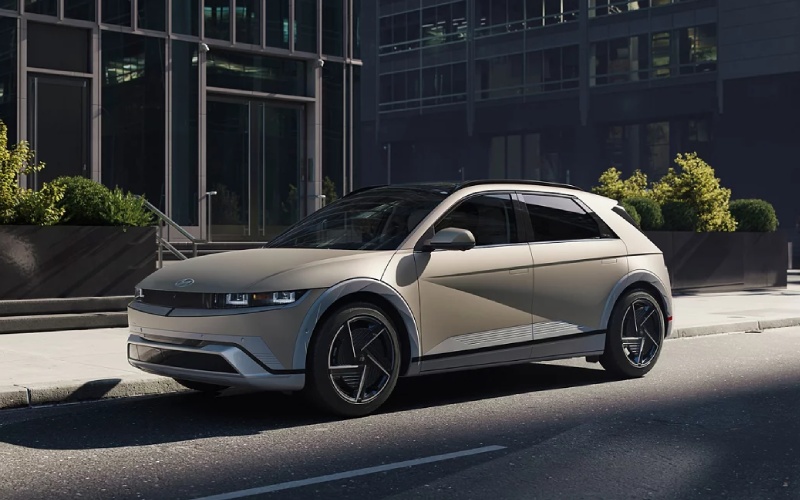
CardinaleWay Hyundai Glendora - How Native NACS Charging Helps 2026 Hyundai IONIQ 5 Drivers around La Verne, CA
One of the most meaningful upgrades for electric SUV shoppers is not just how far an EV can go, but how easily it can recharge when daily life does not follow a perfect plan. That is where native NACS charging compatibility on the 2026 Hyundai IONIQ 5 becomes such a practical advantage. Instead of treating public charging as a special occasion, this EV is designed to make charging feel more natural, more flexible, and easier to build into a routine. For drivers around La Verne, CA, that matters. Local travel may include weekday drives toward the Foothill Freeway, errands around town, college-area traffic, family visits across the San Gabriel Valley, and longer routes toward the coast, mountains, or Inland Empire. Having more compatible charging options helps reduce the friction that some first-time EV shoppers worry about.
The 2026 IONIQ 5 comes with a Tesla Supercharger-compatible NACS port, which means access to a large Supercharger network without needing an adapter for that network. Hyundai also includes a CCS adapter, expanding access to other major DC fast-charging networks such as Electrify America and ChargePoint. That dual-access approach is important because charging confidence is not only about a single station near home. It is about knowing you have options along multiple routes, at different times of day, and during trips that change unexpectedly. CardinaleWay Hyundai Glendora, serving Pomona, La Verne, and Duarte, can help shoppers understand how this charging flexibility fits real driving patterns before making the move to an all-electric SUV.
Why NACS Compatibility Matters
NACS compatibility helps make the IONIQ 5 easier to use away from home because it connects the vehicle to a broad public fast-charging network. For many EV shoppers, the biggest question is not whether charging is possible, but whether charging is convenient enough to support a normal week. With a native NACS port, the 2026 IONIQ 5 is ready for Tesla Supercharger access without an adapter for those stations. That can be especially helpful for drivers who travel beyond a familiar neighborhood and want charging stops to feel more predictable.
It also supports confidence for households that are still planning a home charging setup. A 240V AC Level 2 charger can make home charging simple for daily use, but public fast charging remains valuable for busy weeks, apartment or condo residents, long commutes, and regional trips. Hyundai’s inclusion of a CCS adapter adds another layer of flexibility because drivers are not locked into just one type of charging network. More charging access means more freedom to choose a stop based on route, availability, and convenience.
Fast Charging Built for Real Schedules
The IONIQ 5 is known for charging speed, and that is a major reason shoppers compare it closely with other electric SUVs. Properly equipped models can use 800V/350kW DC ultra-fast charging, and Hyundai notes that the RWD model with the 84kWh battery can add up to 178 miles of range in about 15 minutes when using a 350kW DC fast charger and the included CCS adapter under suitable conditions. The vehicle can also charge from 10-80% in as little as 20 minutes with compatible equipment. For a driver managing work, family, and errands, that kind of charging capability can turn a stop into a useful reset rather than a major delay.
For La Verne-area drivers, fast charging may help when plans stretch beyond the usual commute. A day that starts with school drop-off and ends with a trip across Los Angeles County can be easier to manage when the vehicle supports quick charging on the road. The IONIQ 5 also includes EV Route Planner, which can locate charging stations along specific routes and refresh navigation guidance as you travel. That feature helps remove guesswork by showing charging information as part of the drive rather than leaving the driver to search separately.
What Native NACS and CCS Access Can Help You Do
- Plan longer trips: Use EV Route Planner to identify charging stops along your route and reduce range-related guesswork.
- Charge with more flexibility: Access Tesla Superchargers through the native NACS port and additional networks with the included CCS adapter.
- Support busy routines: Add range during a short stop when using compatible DC fast-charging equipment.
- Bridge home charging gaps: Rely on public charging while installing, upgrading, or deciding on a Level 2 home charger.
- Drive with added confidence: Choose from more charging locations during work trips, errands, and regional travel.
Home Charging Still Plays a Big Role
Public fast charging is valuable, but many EV owners prefer home charging for everyday convenience. With a 240V AC Level 2 home charger, the IONIQ 5 can charge from 10 to 100% in about 7 hours and 20 minutes on properly equipped models, while the SE Standard Range trim can charge in about 5 hours and 40 minutes with a compatible Level 2 setup. For many households, that means the vehicle can recharge while parked overnight, helping each day begin with useful range already available.
Hyundai Home can also help EV shoppers think bigger by connecting charging with options such as solar panels, energy storage systems, and a 240-volt Level 2 charger. Not every driver will pursue a full home energy setup, but the ability to evaluate those options is part of what makes the IONIQ 5 feel future-ready. If you live in a single-family home, have a dedicated parking space, or are working with a property manager on charging access, understanding the home setup early can make ownership smoother.
Charging Confidence Pairs with Everyday EV Advantages
Charging is only one piece of the IONIQ 5 story. The vehicle also brings the benefits that make EV driving feel enjoyable from the first mile, including smooth instant torque, regenerative braking, zero tailpipe emissions, and freedom from gas station stops. It does not require oil changes or transmission fluid maintenance, which can simplify service expectations compared with many gas-powered vehicles. The cabin supports modern routines with a standard 12.3-inch touchscreen with navigation, standard 12.3-inch digital instrument cluster, Bluelink+, wireless Apple CarPlay® and Android Auto™, and available Vehicle-to-Load (V2L) 120V charging outlets for powering compatible devices.
The IONIQ 5 also uses its electric platform to create a spacious interior with a flat floor and a longer-than-expected wheelbase. That makes the SUV feel open and flexible for passengers, work bags, groceries, and daily gear. Available AWD models can deliver up to 320 hp and up to 446 lb.-ft. of torque, while RWD models focus on efficient electric driving and extended range. This balance of performance, comfort, and charging access is why the IONIQ 5 feels less like a compromise and more like a complete EV solution.
Frequently Asked Questions:
Can the 2026 IONIQ 5 use Tesla Superchargers?
Yes. The 2026 IONIQ 5 comes with a Tesla Supercharger-compatible NACS port, allowing access to compatible Tesla Superchargers without an adapter for that network.
Does the IONIQ 5 also work with CCS charging stations?
Yes. Hyundai includes a CCS adapter, which helps drivers use other compatible DC fast-charging networks such as Electrify America and ChargePoint.
How fast can the IONIQ 5 charge?
With compatible ultra-fast charging equipment, properly equipped models can charge from 10-80% in as little as 20 minutes. Charging time varies based on equipment, battery condition, temperature, and other factors.
Is home charging still recommended?
Home charging is very useful for daily convenience. A 240V AC Level 2 charger can help keep the IONIQ 5 ready for normal routines without relying only on public charging.
For shoppers comparing EVs, charging access should be near the top of the checklist. Native NACS compatibility, an included CCS adapter, EV Route Planner, and ultra-fast charging capability help the 2026 Hyundai IONIQ 5 answer many of the practical questions that come up before switching to electric. It is not just about impressive specs. It is about reducing daily friction, making longer drives easier to plan, and giving drivers the confidence to use an EV as a primary vehicle.